Book · Sun Tzu
The Art of War
Personal recommendation by Marshall Delpé. Not made by Marshalldelpe.com.
The Art of War
Book · Sun Tzu·
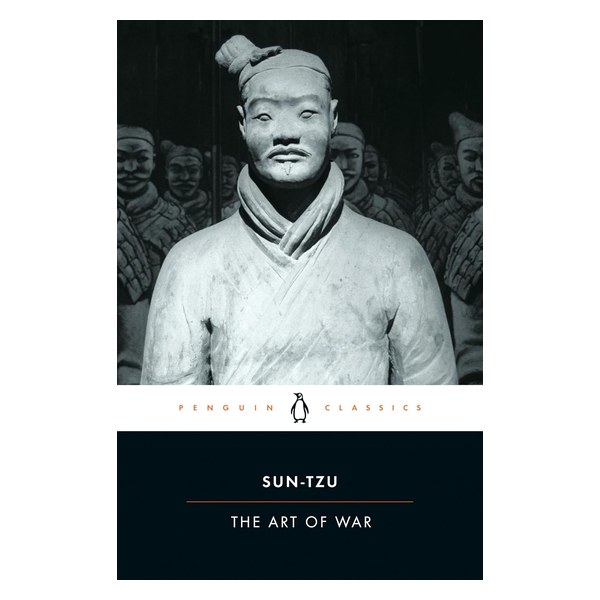
Ancient battle advice that works surprisingly well on salary negotiations.
What it does: An ancient Chinese treatise on military strategy, traditionally credited to the general Sun Tzu, written around the 5th century BC. In 13 short chapters it covers planning, positioning, deception, intelligence and when to fight — and when not to. Its core idea: the best victory is the one won without fighting.
Who it's for: Anyone dealing with competition or conflict — in business, negotiation, investing, sports or office politics — who wants timeless principles about preparation, patience and knowing the terrain.
Why I use it: It is short enough to reread every year, and every reread lands differently. "Know the enemy and know yourself" maps directly onto investing and staying within your circle of competence, and the emphasis on avoiding unnecessary battles is a reminder that the strongest position is often the one where you never have to fight. It pairs naturally with The 48 Laws of Power.
Tradeoffs: The aphorisms are compressed and sometimes cryptic, so translation quality matters a lot. It is easy to over-apply military metaphors to everyday life, and the original is about war, not business — the connections take reflection to make.
Alternatives: The 48 Laws of Power and The 33 Strategies of War by Robert Greene, The Book of Five Rings by Miyamoto Musashi, and On War by Carl von Clausewitz.
As an Amazon Associate I earn from qualifying purchases, at no extra cost to you. I only recommend what I actually use.
More like this
You might also find helpful
The 48 Laws of Power
Book · Robert Greene·
Read it so you can spot the person at work who already did.
What it does: Robert Greene distils 3,000 years of history — Machiavelli, Sun Tzu, Bismarck, Louis XIV, con artists and courtesans — into 48 laws describing how power is gained, held and lost. Each law comes with historical stories of people who followed it and people who broke it, plus the reversal: when the law doesn't apply.
Who it's for: Anyone who works with people — in a hospital, a company, a negotiation or an investment deal — and wants to understand the unspoken dynamics at play. Especially useful if you've ever been blindsided by office politics or someone else's agenda.
Why I use it: I read it as a field guide to human behaviour rather than a playbook. It helps me recognise manipulation when I see it, protect my reputation, and stay calm instead of reacting. Laws like "Never outshine the master", "Guard your reputation with your life" and "Say less than necessary" have saved me from mistakes at work. It pairs well with Munger's psychology of human misjudgment, which you'll find in Poor Charlie's Almanack.
Tradeoffs: Some of the laws are ruthless, and following them literally can cost you trust and relationships. It's long and repetitive in places, and it's best read defensively — to understand power — not as permission to be cold or deceptive. The stories are selective history, not rigorous research.
Alternatives: The Laws of Human Nature and Mastery by Robert Greene, How to Win Friends and Influence People by Dale Carnegie (the warmer approach), Influence by Robert Cialdini (the research-backed version).
As an Amazon Associate I earn from qualifying purchases, at no extra cost to you. I only recommend what I actually use.
The Big Five (OCEAN) Model
Personality · Psychology·
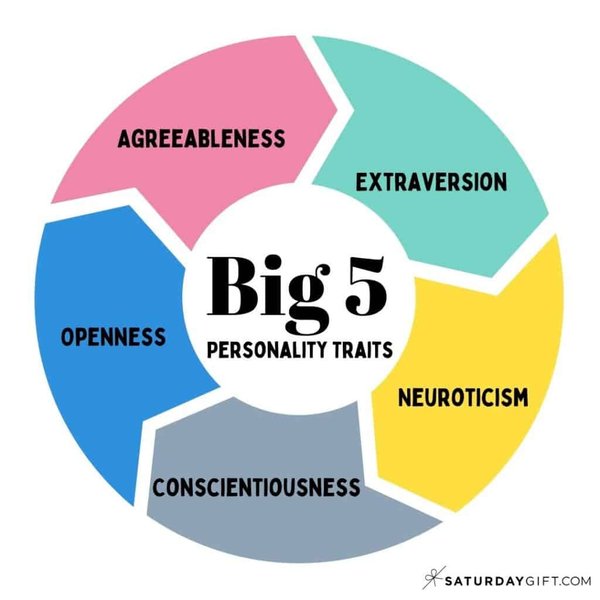
The personality test scientists actually trust, no horoscope required.
What it does: The most widely used and research-backed model of personality in psychology. It measures five independent traits, each on a spectrum: Openness to experience, Conscientiousness, Extraversion, Agreeableness and Neuroticism (OCEAN). Instead of putting you in a box, it shows where you fall on each scale compared with other people.
Who it's for: Anyone who liked the idea of personality typing but wants something more rigorous, and anyone trying to understand their own habits, relationships and work fit with more precision.
Why I use it: It is the version of personality science that holds up. Conscientiousness predicts follow-through, Neuroticism shapes how I react under pressure, and Openness explains why I keep collecting ideas for this realm. Seeing my traits as dials rather than labels tells me which defaults to lean on and which to build systems around.
Tradeoffs: Scores are only as honest as your answers, and the traits describe tendencies, not destiny — behaviour still depends on the situation. It is less catchy than a four-letter type, so it rarely becomes a shared language with friends, and many free online versions are short and imprecise.
Alternatives: MBTI or 16Personalities for a more memorable, conversational framework; the HEXACO model, which adds an Honesty-Humility trait; and Jordan Peterson's paid Understand Myself assessment for a detailed Big Five report.
This is a personal recommendation, not a paid promotion.